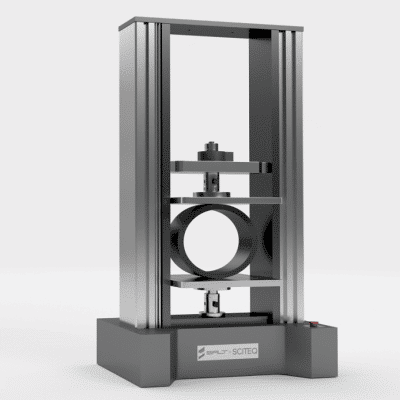
ISO 13968 specifies a test method for measuring the ring flexibility of non-pressure thermoplastics pipes. It is used to assess how pipes deform under external load without failure, ensuring consistent quality, regulatory compliance, and comparability across various pipe materials and designs in the plastic pipe industry.

What ISO 13968 is and why it matters in plastics testing
ISO 13968 is an international standard that specifies a test method for determining the ring flexibility of non-pressure thermoplastics pipes, including structured-wall and solid-wall types. The standard defines a procedure intended to assess how well a length of plastic pipe can deform without rupturing or developing cracks, particularly when subjected to external bending forces. This method is critical for evaluating the mechanical performance and flexibility of pipes used in buried or above-ground installations, helping to ensure reliable operation in practical applications.
Significance for quality assurance and product development
The adoption of ISO 13968 helps manufacturers and quality control laboratories compare pipe products on an equal basis, independent of material type or construction method. It provides a uniform methodology for quantifying ring flexibility, which is essential for product certification, regulatory compliance, and comparative benchmarking between different suppliers or product lines. This standard is frequently referenced in industry specifications and is a required test in many national and international product standards for non-pressure pipelines.
Relevance for manufacturers and end users
Following the protocol established by ISO 13968 not only improves consistency in testing, but also allows manufacturers to demonstrate the mechanical reliability of their pipe products for customers, regulators, and project planners. Compliance with this standard can be a prerequisite for approvals and acceptance in public and private infrastructure projects, ensuring pipes perform as expected over their service life, particularly when exposed to displacement or ground movement.
Takeaway
ISO 13968 plays an important role in assessing the flexibility and mechanical performance of plastic pipes designed for non-pressurized applications, helping to establish confidence in the suitability and durability of these products in various installation environments.
Preparation and selection of pipe specimens
The ISO 13968 protocol begins with selecting and conditioning test samples according to dimensions specified in the standard. Each pipe specimen must be cut to a specified length, with care taken to ensure that the ends are smooth and perpendicular to the pipe axis. Samples are typically conditioned at a defined temperature and humidity for a minimum period before testing, ensuring consistent test conditions and reliable results.
Setting up the test apparatus
The ring flexibility test uses a compression apparatus, often a universal testing machine fitted with parallel plates or curved supports. The specimen is positioned horizontally between the loading surfaces, and the machine is configured to compress the pipe ring uniformly to a predetermined percentage of its original diameter. Settings for speed and alignment are important to ensure compliance with ISO 13968.
Carrying out the flexibility test
The machine compresses the pipe specimen until it reaches a specified level of deformation, usually expressed as a percentage reduction in diameter. Throughout the test, the specimen is observed for signs of cracking, splitting, or permanent deformation that exceeds allowable limits. The force applied and the deformation achieved are recorded, with particular attention to whether the pipe withstands the required deflection without failure.
Recording results and evaluation
All observations and measurements from the test are documented, including the level of deflection at which failure occurs, the nature of any defects, and any visible damage. The results are compared with product specifications or standard limits to determine if the pipe specimen passes or fails. Data from multiple specimens may be averaged for a comprehensive assessment.
Post-test considerations
After testing, specimens and data are reviewed to verify accuracy and completeness. Any deviations from standard methods should be reported. The results help manufacturers verify product consistency, demonstrate compliance, or guide design improvements. These data can be used for third-party certification, customer assurance, or internal quality control programs.
Summary
Applying ISO 13968 involves careful sample preparation, precise use of test equipment, and thorough data recording. Following each step of the standard ensures results are accurate and comparable, supporting quality assurance and compliance in non-pressure pipe applications.
We are at your disposal for any questions, comments and suggestions. We look forward to hearing from you.
Feel free to contact us using the contact form below.
We strive to answer all inquiries within 24 hours (on working days).