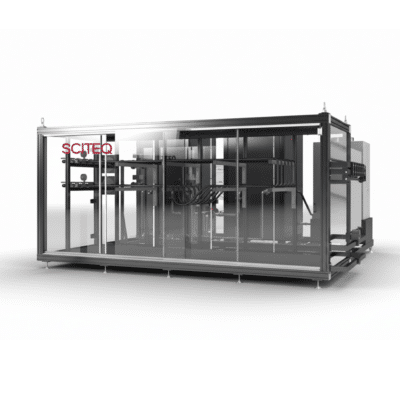
ISO 19893 is an international test method used to evaluate the resistance of thermoplastic piping systems to temperature cycling under pressure. The standard focuses on how complete pipe assemblies, including pipes, fittings and joints perform when exposed to repeated alternations between hot and cold water.

The method is widely applied in hot and cold water installations, where thermal fluctuations create expansion and contraction stresses that can affect long-term system integrity. Rather than testing individual components in isolation, ISO 19893 assesses the behaviour of the assembled system under realistic service conditions.
ISO 19893 provides a framework for testing—but it does not define fixed test values. Instead, key parameters such as temperature levels, pressure, cycle duration and number of cycles are specified by the referring system standards (e.g. product standards for specific pipe materials or applications).
The standard outlines how to:
This makes ISO 19893 particularly relevant for systems used in:
Temperature cycling introduces complex stress patterns in piping systems. ISO 19893 is designed to capture these combined effects by exposing assemblies to simultaneous:
The test evaluates whether the system can maintain integrity—typically defined by the absence of leakage—during and after the specified number of cycles.
This makes ISO 19893 a key validation method for:
Preparation of the test assembly
The test begins with assembling a representative piping configuration according to the applicable product or system standard. This includes pipe sections with fixed supports, free-moving segments and bends, designed to replicate real installation conditions.
The assembly is conditioned at ambient temperature before testing and filled with water to remove all entrapped air.
All critical parameters are defined by the referring standard and must be verified before testing begins:
Accurate definition of these parameters is essential to ensure that results are valid and comparable.
The test is initiated by alternating hot and cold water through the system while maintaining internal pressure. The transition between temperature phases must occur within specified limits to ensure consistent thermal loading.
During the first cycles, adjustments may be made to stabilize temperature distribution and eliminate minor leakage before the main test sequence continues.
Throughout the test, the system is continuously monitored for:
After completing the required number of cycles, all joints and components are inspected. Any leakage is recorded along with its location and timing during the test.
A complete ISO 19893 test report includes:
This documentation supports product validation, certification and traceability.
Implementing ISO 19893 temperature cycling testing requires a structured approach combining precise parameter control, realistic test setups and thorough monitoring.
The process ensures:
ISO 19893 plays a central role in demonstrating that modern thermoplastic piping systems can withstand the dynamic conditions encountered in real-world application
We are at your disposal for any questions, comments and suggestions. We look forward to hearing from you.
Feel free to contact us using the contact form below.
We strive to answer all inquiries within 24 hours (on working days).