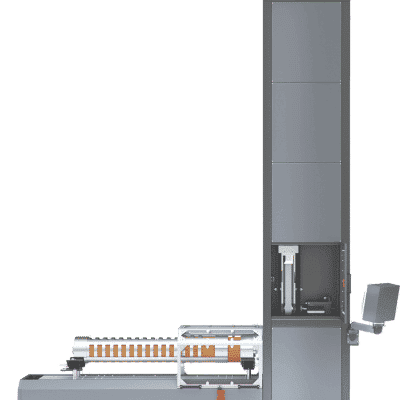
ISO 13477 is an internationally recognized standard that specifies a test method for determining the resistance of thermoplastic pipes to rapid crack propagation (RCP) using the S4 (small-scale steady-state) test method. The standard describes procedures and equipment needed to evaluate how plastic pipes behave under conditions where a crack is initiated and allowed to propagate rapidly under controlled internal pressure and temperature.
ISO 13477 plays a critical role in assessing the safety and performance of plastic piping systems, particularly in applications such as gas and water distribution, where rapid fracture can lead to sudden and catastrophic failure.
Scope of Application
ISO 13477 addresses a critical failure mode—rapid crack propagation, which differs fundamentally from slow crack growth. RCP involves the fast, unstable propagation of a crack once initiated, potentially leading to long running fractures in pipelines.
The method is primarily applicable to pipes but may also be used for evaluating material performance in pipe form. Results generated by ISO 13477 are used to determine key parameters such as critical pressure (Pc), which indicates whether a crack will propagate or arrest under given conditions.
These results support:
Testing Parameters and Procedures
The ISO 13477 S4 test is conducted using a pipe specimen subjected to controlled internal pressure and low temperature conditions. A crack is artificially initiated, typically by mechanical impact, and its propagation behavior is observed.
Key parameters include:
The test determines whether the crack propagates along the pipe or arrests after initiation. The outcome allows identification of the critical pressure below which crack arrest occurs and above which rapid propagation takes place. The standard provides detailed guidance for specimen preparation, test configuration, crack initiation, and result interpretation to ensure reproducibility across laboratories.
Takeaway
ISO 13477 provides a structured framework for evaluating rapid crack propagation resistance in thermoplastic pipes, enabling consistent assessment of critical failure behavior in plastic piping systems.
Overview of the Procedure
Conducting a rapid crack propagation test according to ISO 13477 involves controlled preparation of pipe specimens, conditioning to defined temperatures, pressurization, and crack initiation. The test produces data essential for determining whether cracks will propagate or arrest under specific conditions.
Preparing the Sample and Test Setup
Pipe samples are prepared according to strict dimensional requirements defined in the standard. The specimen is fitted with end caps and mounted in a pressurization system.
Executing the Test and Monitoring
The test begins by pressurizing the conditioned pipe specimen to a defined level. A crack is then initiated, typically using a striker mechanism. The propagation behavior is observed and recorded.
Collecting and Analyzing Results
The primary outcome of the ISO 13477 test is the determination of critical pressure (Pc) for crack propagation. Multiple tests may be performed at different pressures to establish this value.
Key Points to Remember
Adherence to ISO 13477 ensures reliable evaluation of a material’s resistance to rapid crack propagation—a key safety parameter in pressurized piping systems. Accuracy in temperature control, pressure application, and crack initiation is essential for valid and reproducible results.
Summary
ISO 13477 provides a systematic method to evaluate the rapid crack propagation resistance of thermoplastic pipes using the S4 small-scale test. It is a critical tool for ensuring pipeline integrity and preventing catastrophic failure.
We are at your disposal for any questions, comments and suggestions. We look forward to hearing from you.
Feel free to contact us using the contact form below.
We strive to answer all inquiries within 24 hours (on working days).