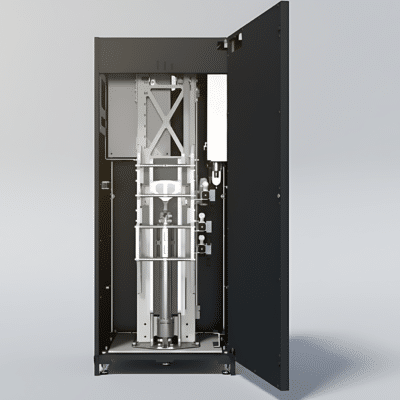
ASME B16.51 establishes the requirements for copper and copper alloy press-connect pressure fittings used with hard-drawn seamless copper water tube in water piping systems. The standard covers press-connect fitting systems designed for operating pressures up to 200 psi (1380 kPa) and temperatures ranging from 32°F to 200°F (0°C to 93°C).
The standard provides manufacturers, testing laboratories, engineers, and installers with a consistent framework for qualifying press-connect fittings and ensuring dependable system performance. ASME B16.51 addresses dimensions, materials, pressure-temperature ratings, design qualification, installation requirements, and product marking.
ASME B16.51 focuses on the complete press-connect system, including the fitting, tube, and joint assembly. The standard defines requirements for fitting dimensions and tolerances, construction materials, pressure-temperature ratings, product marking, and installation procedures.
Qualification testing is used to verify that fittings can maintain pressure integrity and leak-tight performance throughout their intended operating range. By standardizing these requirements, ASME B16.51 promotes compatibility, consistency, and reliability across manufacturers and installations.
The standard is commonly used during product development, certification, and production quality control to confirm that fittings meet established performance requirements before entering service.
ASME B16.51 is widely applied in potable water, plumbing, commercial building, and mechanical piping systems utilizing copper tubing and press-connect joining technology. The standard provides an accepted basis for product qualification and specification compliance throughout the industry.
However, ASME B16.51 is intended specifically for copper and copper alloy press-connect fittings used with designated copper tube systems. Performance results obtained during qualification represent controlled laboratory conditions and may be influenced by installation practices, operating environments, and service conditions encountered in the field.
ASME B16.51 provides a standardized approach for qualifying copper and copper alloy press-connect pressure fittings for water piping systems. The standard helps ensure leak-tight performance, mechanical reliability, and consistent product quality.
Begin by selecting representative fittings and copper tube specimens in accordance with the product qualification requirements. Assemble each sample using approved pressing tools and installation methods specified by the manufacturer.
Inspect all components before testing to ensure they are free from defects, damage, or contamination that could affect test results. Proper sample preparation helps ensure that the qualification process accurately reflects real-world installation conditions.
Install the assembled specimens in the appropriate pressure testing equipment. Secure all connections and verify that the test setup is leak-tight before applying pressure.
Configure and calibrate the required instrumentation, including pressure transducers, temperature monitoring devices, and data acquisition systems. Ensure that all equipment is operating within specified tolerances before testing begins.
Apply the specified pressure conditions required by the qualification procedure and maintain the required test environment throughout the evaluation period. Monitor the assembled joints for leakage, deformation, movement, or any indication of failure.
Depending on the qualification requirements, testing may include pressure holding, burst resistance evaluation, durability verification, or cyclic pressure testing to simulate service conditions experienced during operation.
Accurate monitoring and documentation throughout the test are essential for demonstrating compliance with the standard.
After completion of testing, inspect the fittings and record all relevant observations. Document pressure levels, test duration, temperatures, leakage events, and any signs of permanent deformation.
Analyze the collected information and compare results against the applicable qualification criteria. Proper documentation supports certification, product validation, and ongoing quality assurance activities.
Always follow laboratory safety procedures when conducting pressure testing. Pressurized systems contain stored energy that can present hazards if equipment is improperly installed or operated.
After testing, safely depressurize the system before disassembling specimens. Regular maintenance and calibration of testing equipment help ensure reliable operation and accurate test results over time.
Conducting ASME B16.51 testing involves proper specimen preparation, controlled pressure application, accurate monitoring, and thorough documentation of results. The process enables manufacturers to demonstrate the performance and reliability of copper and copper alloy press-connect fittings used in water piping systems.
We are at your disposal for any questions, comments and suggestions. We look forward to hearing from you.
Feel free to contact us using the contact form below.
We strive to answer all inquiries within 24 hours (on working days).