ASTM F 3226 is a performance specification that establishes the material, manufacturing, testing, and qualification requirements for metallic press-connect fittings used in piping and tubing systems with a maximum allowable working pressure of up to 300 psi (2.07 MPa). Press-connect fittings create a permanent, restrained connection through mechanical deformation of the fitting, pipe, tube, or a combination of these components, resulting in a leak-tight joint suitable for demanding service conditions.
The standard provides manufacturers, testing laboratories, shipbuilders, engineers, and regulatory authorities with a common framework for evaluating fitting performance, reliability, and safety. Successful completion of the specified tests demonstrates that a fitting system satisfies the technical qualification requirements for its intended application.
ASTM F 3226 classifies fittings according to material type, pressure class, and seal material. The specification covers carbon steel, stainless steel, copper alloys, copper-nickel alloys, and brass fittings, together with common elastomer sealing materials such as EPDM, HNBR, and FKM.
Qualification testing focuses on demonstrating that fittings can withstand internal pressure, mechanical loading, environmental exposure, and long-term service conditions without leakage or joint failure. The standard emphasizes system performance rather than solely dimensional compliance, ensuring that fittings perform as intended under real operating conditions.
Testing may include pressure integrity verification, burst resistance evaluation, pull-out resistance testing, leakage assessment, and durability testing designed to validate long-term reliability.
ASTM F 3226 is widely applicable to metallic press-connect fitting systems used in marine, industrial, commercial, and building services applications. It is particularly valuable for qualifying new fitting designs, verifying manufacturing consistency, and supporting product certification programs.
While the standard provides a comprehensive qualification framework, test results are specific to the fitting design, pipe material, sealing technology, and test conditions used during evaluation. Actual field performance may be influenced by installation quality, environmental factors, maintenance practices, and operating conditions beyond those evaluated during laboratory testing.
ASTM F3226M-19 provides a standardized method for qualifying metallic press-connect fittings through a range of performance and integrity tests. The specification helps ensure safe, reliable, and leak-tight piping connections across multiple industries.
Begin by selecting representative fittings, pipes, tubes, and sealing components according to the manufacturer’s specifications and ASTM F3226 requirements. Assemble all test samples using approved pressing tools and procedures. Before testing, inspect specimens for damage, assembly errors, or visible defects that could influence results.
It is important that all joints represent actual production assemblies and are prepared using the same installation methods intended for field use. Proper documentation of materials, dimensions, and assembly procedures helps ensure traceability throughout the qualification process.
Install the prepared specimens in the appropriate test apparatus. Depending on the required qualification program, this may include hydrostatic pressure systems, burst testing equipment, cyclic pressure testing systems, mechanical loading fixtures, or environmental conditioning chambers.
Verify that all instrumentation has been calibrated and that pressure, temperature, and monitoring systems are operating within required tolerances before testing begins.
Apply the specified test conditions outlined in ASTM F 3226. These may include sustained pressure exposure, burst testing, leak testing, mechanical strength evaluation, and cyclic pressure loading. The objective is to verify that the fitting maintains structural integrity and leak-tight performance throughout the qualification program.
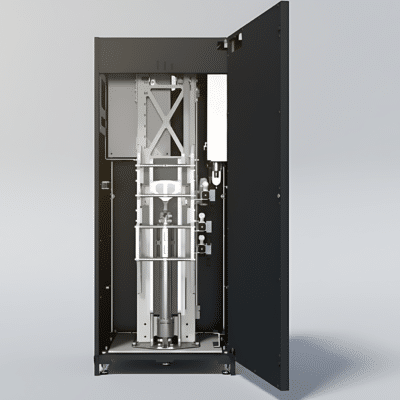
For cyclic durability testing, systems such as the SCITEQ Cyclic Pressure Tester may be used to repeatedly expose fittings to changing internal pressure conditions while monitoring for leakage or failure. This helps simulate service-related stresses and validates long-term joint reliability.
Record all observations carefully throughout the testing process, including pressure levels, temperatures, loading conditions, leakage events, and any evidence of deformation or joint movement.
Following completion of each test sequence, evaluate the specimens according to the acceptance criteria defined by ASTM F3226. Review pressure performance, leakage behavior, mechanical integrity, and overall fitting condition.
Document all measured values and observations in a structured format to support certification, quality assurance, or product development activities. Where multiple specimens are tested, results should be analyzed collectively to demonstrate consistent performance.
Testing press-connect fittings often involves pressurized systems and stored energy that can create hazards if not properly controlled. Always follow laboratory safety procedures and ensure personnel are trained in equipment operation and emergency response.
After testing, safely depressurize all equipment before removing specimens. Regular maintenance and calibration of pressure systems, sensors, fixtures, and sealing components are essential for obtaining accurate and repeatable results.
ASTM F3226 provides a structured qualification framework for evaluating metallic press-connect fittings used in pressure piping systems. Through controlled testing of pressure integrity, mechanical performance, and long-term durability, manufacturers can verify the reliability and safety of their fitting systems.
We are at your disposal for any questions, comments and suggestions. We look forward to hearing from you.
Feel free to contact us using the contact form below.
We strive to answer all inquiries within 24 hours (on working days).