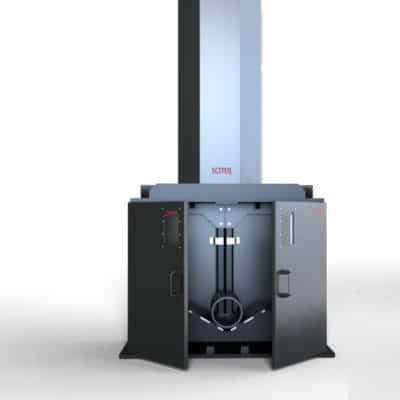
ISO 11173-2017 Specifies a method for determining the resistance to external blows of thermoplastic pipes of circular cross-section, called the staircase method.
Overview
ISO 11173 is an internationally recognized standard that defines a method for determining the resistance of thermoplastic pipes to external blows. The method, known as the staircase method, evaluates how pipes respond to impact from a falling weight under controlled laboratory conditions.
The main objective of ISO 11173 testing is to assess the ability of plastic pipes to withstand mechanical shocks that may occur during transportation, installation, or long-term service. This ensures reliable pipe performance and reduces the risk of failure in real-world applications.
The standard specifies procedures for test setup, equipment requirements, sample preparation, and result evaluation. It applies primarily to thermoplastic pipes of circular cross-section and is typically conducted at controlled temperatures such as 0 °C to simulate demanding conditions.
Structure and significance
ISO 11173 provides a consistent and repeatable framework for impact testing of plastic pipes, enabling manufacturers and laboratories to benchmark product performance with confidence. The standard ensures that results are comparable across different production batches, materials, and testing facilities.
By using the staircase (stepwise) method, ISO 11173 introduces a statistical approach to impact resistance testing, rather than relying on simple pass/fail criteria. This improves the accuracy of performance evaluation and gives deeper insight into pipe durability.
For manufacturers, this means:
For testing laboratories, it ensures:
Interpretation and application
ISO 11173 is widely used in the plastic pipe industry for quality control, product development, and certification. It is essential for verifying that thermoplastic pipes can withstand external impacts without cracking or failing.
The main test result is the H₅₀ value, which represents the drop height at which 50% of test specimens fail.
This value provides a statistically valid measure of pipe toughness and impact resistance.
Typical application areas include:
By applying ISO 11173, manufacturers can ensure their products meet both regulatory requirements and customer expectations for durability and reliability.
Takeaway
ISO 11173 is a key standard for evaluating the mechanical robustness of thermoplastic pipes under external impact conditions. It enables accurate, repeatable testing and supports long-term product performance.
Fundamental testing workflow
Implementing ISO 11173 involves a structured testing procedure based on repeated impacts and incremental adjustment of drop height. The staircase method ensures accurate statistical analysis of pipe performance.
Each specimen receives a single controlled impact. Based on the result, the drop height is adjusted up or down for the next test, creating a stepwise testing sequence.
Reliable results depend on:
Sample preparation and test conditions
Proper sample preparation is critical for valid test results. Pipe specimens must be cut, conditioned, and inspected according to ISO 11173 requirements.
Samples are typically conditioned at 0 °C before testing and mounted on a rigid support fixture such as a V-block to ensure consistent impact positioning.
Applying impact load (staircase method)
Testing is performed using a falling weight impact testing machine, where a striker of defined mass is dropped from a controlled height.
Each specimen is impacted once and classified as:
The drop height is then adjusted:
This stepwise progression continues across multiple samples to build a statistical dataset.
Result assessment and documentation
After completing the test series, results are analyzed to determine the H₅₀ value, representing the impact resistance of the pipe batch.
All test data must be documented according to ISO 11173 requirements to ensure traceability and repeatability.
Validating product performance
ISO 11173 testing provides manufacturers with a reliable method to verify impact strength and durability of thermoplastic pipes. The results support:
Summary of 11173-2017
Following ISO 11173 ensures a consistent and accurate evaluation of impact resistance in thermoplastic pipes. The staircase method provides a statistically robust approach that reflects real-world mechanical stresses.
For manufacturers and testing laboratories, compliance with ISO 11173 is essential for delivering high-quality, durable piping systems that meet modern industry requirements.
We are at your disposal for any questions, comments and suggestions. We look forward to hearing from you.
Feel free to contact us using the contact form below.
We strive to answer all inquiries within 24 hours (on working days).